Why temperature matters
Hotter water generally extracts faster. Cooler water generally extracts more slowly. That is why many home filter recipes start near the off-boil range, while some immersion recipes can work a little cooler if time is longer.
Exact lab numbers are less important than consistency. If your kettle jumps wildly between brews, your cups will too.
Practical home ranges
Many educational filter brewing guides discuss water in a broad range around the upper end of hot drinking water—often described as roughly just off boiling for pour-over style methods. Espresso machines heat and pressurize water differently; follow your machine’s manual rather than copying kettle advice blindly.
If your cups taste sour and thin with a fine grind already, slightly hotter water or finer grind (one change at a time) can help. If cups taste harsh and drying, slightly cooler water or a coarser grind may help.
Water quality, briefly
Tap water varies by city. Extremely hard water can leave scale in machines. Extremely soft or distilled water can taste flat and may not extract pleasantly for some people. If your tap water smells strongly of chlorine, letting it sit or using a simple carbon pitcher filter is a common household approach—check local drinking-water guidance for safety context.
This site does not sell filters or prescribe mineral recipes. For drinking-water safety questions, rely on local utilities and public health sources such as CDC and EPA pages.
Method notes
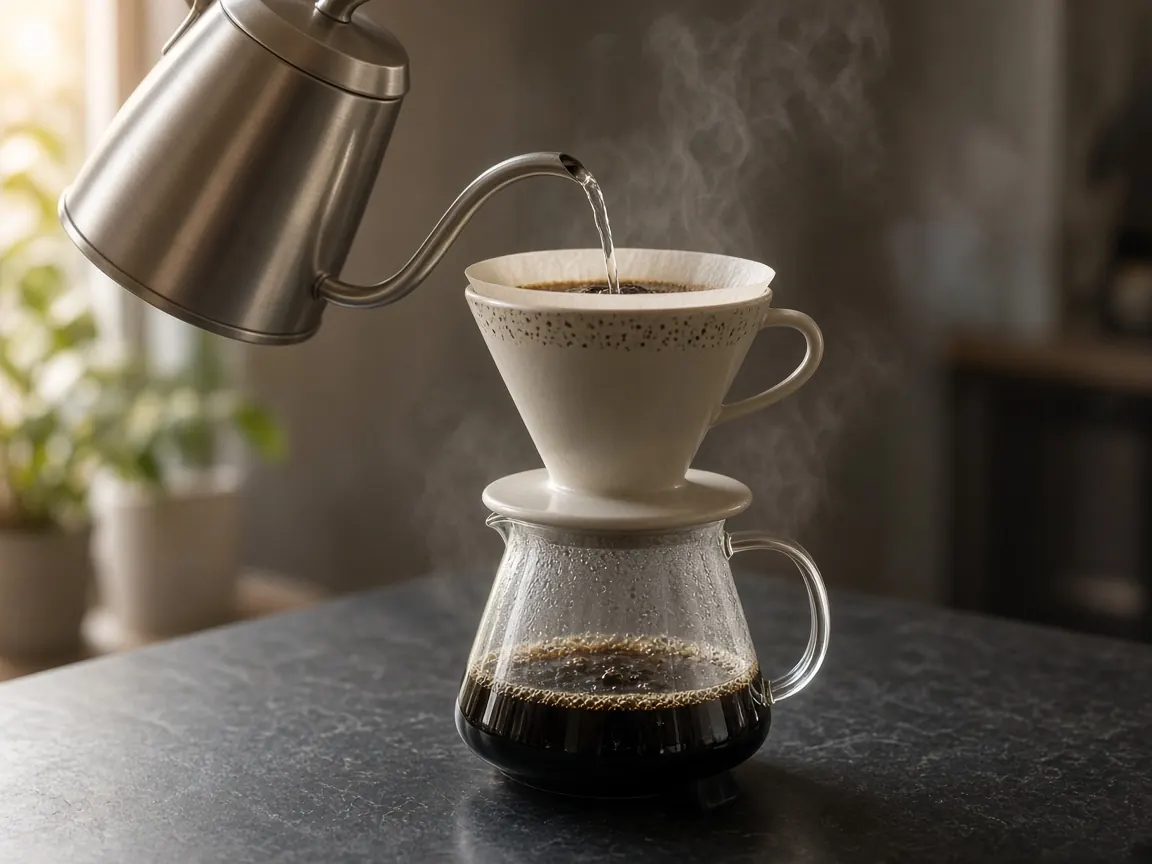
- Pour-over: heat water, rinse the paper filter, bloom, then pour in stages. Keep kettles consistent rather than reheating halfway through in a panic.
- French press: water just off boil is a common starting point; steep time and grind matter as much as temperature.
- Espresso: machine boilers and thermoblocks differ—use manufacturer guidance and tasting, not kettle folklore.
Checklist
- Use the same kettle setting or boiler warm-up habit each morning.
- Note temperature only if you can measure it; otherwise note “off boil” vs “cooler.”
- Adjust grind or time before inventing complex water chemistry rituals.
Limits
Temperature advice here is educational. It is not a lab protocol, medical guidance, or a guarantee of café flavor. Appliance safety instructions always win over blog ranges.
FAQ
Is boiling water always wrong?
Many filter methods use water just off boil. If cups taste harsh, try slightly cooler—one change at a time.
Should I buy mineral packets?
Optional. Fix recipe consistency before complex water projects.
Keep practicing with intention
Home coffee improves when you repeat a simple recipe often enough to recognize change. Keep your kettle, grinder, and brewer clean enough that flavor experiments are fair. If you share a kitchen, leave the recipe on a sticky note so the next person does not silently change three dials.
When you want math help for a different mug size, open the free Coffee Brew Ratio Calculator, print or save a recipe on your device if you like, and return to tasting. Educational ranges are tools—not absolute laws for every bean and every city water supply.
Keep notes short and honest
Two tasting words and one next-step note are enough. Avoid rewriting your entire method every morning. Steady practice, clean gear, and a scale will teach more than another gear purchase.