A calm pour-over for weekdays
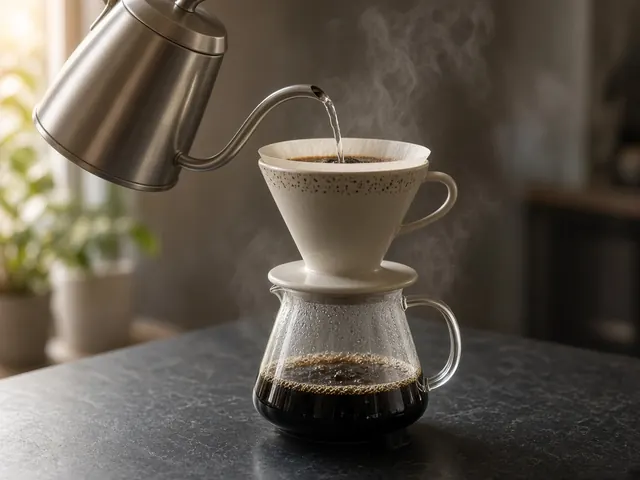
Pour-over brewing lets you control bloom, pour rate, and total water. It rewards a scale and a gooseneck kettle, but you can still learn the pattern with careful pouring from a standard kettle.
This method is educational and brand-neutral. Paper filter shape and dripper geometry differ; follow your dripper’s basic geometry and rinse the paper first.
Why the bloom matters
Wetting the grounds at the start releases trapped gas from freshly roasted coffee and helps water reach the bed more evenly. A short bloom—often around 30–45 seconds with a small amount of water—is a common educational starting point.
After the bloom, add water in stages to keep the bed from floating wildly or drying out. Keep the total brew time in a range you can repeat, then adjust grind rather than inventing a new pour ballet every day.
Step-by-step starting recipe
Follow these as a starting sequence, then adjust by taste.
- Heat water to your usual hot range (often just off boil for many filter recipes).
- Rinse the paper filter in the dripper; discard rinse water.
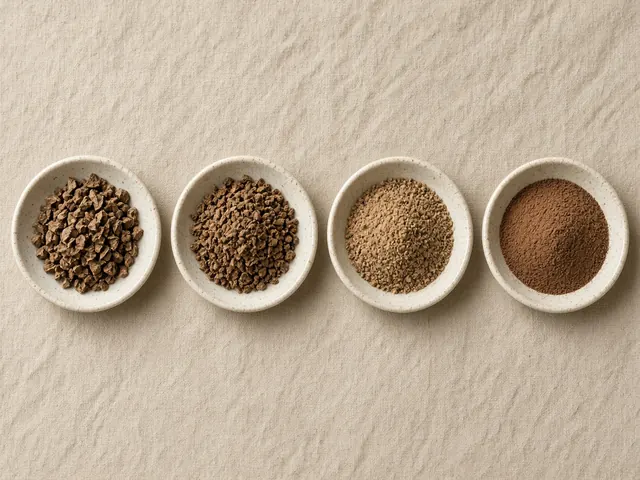
- Add a starting dose such as 18 g coffee; grind medium-fine like table salt as a first guess.
- Bloom with about twice the coffee weight in water (around 36 g), wait ~30–45 seconds.
- Pour in circles or pulses to reach a total near 1:16 (about 288 g water for 18 g coffee).
- Aim for a total time in a range you can log—often a few minutes depending on dripper and grind.
- Swirl gently if your dripper benefits from it; serve when dripping slows.
Common mistakes
- Skipping the rinse and tasting paper.
- Grinding so fine the bed stalls, then pouring harder instead of coarsening.
- Changing dose, grind, and pour pattern on the same morning.
- Calling every bitterness a “dark roast” problem when the grind is too fine.
Checklist
- Scale on, recipe written.
- Paper rinsed.
- One variable noted for tomorrow.
Ratio help
Use the Coffee Brew Ratio Calculator if you want different cup sizes. Ratios are starting points—taste decides.
Honest limits
This is home education, not a competition protocol. Filters, water, and grinders vary. No health claims.
Realistic example
On a weekday, write your dose and water targets before you heat water. Brew once, taste without sugar first, then decide whether tomorrow needs a finer grind, a coarser grind, or simply a cleaner brewer. Small honest notes beat dramatic overhauls.
FAQ
Is this the only correct way to brew?
No. These are educational starting points for home kitchens in the United States. Taste and your equipment manuals matter.
Will this fix every bad cup?
No single article can. Use cleaning, ratio, grind, and time in order before you replace gear.
Do you sell the equipment mentioned?
No. BrewCraftJournal is an independent educational publication without affiliate store rankings.
Keep practicing with intention
Home coffee improves when you repeat a simple recipe often enough to recognize change. Keep your kettle, grinder, and brewer clean enough that flavor experiments are fair. If you share a kitchen, leave the recipe on a sticky note so the next person does not silently change three dials.
When you want math help for a different mug size, open the free Coffee Brew Ratio Calculator, print or save a recipe on your device if you like, and return to tasting. Educational ranges are tools—not absolute laws for every bean and every city water supply.